
Losing a filling or having a crown come loose almost always happens at the worst possible time — a weekend, a holiday, or the middle of the night when no dentist is open. It's uncomfortable, the exposed tooth can be sharp or sensitive, and it's easy to panic. The good news: with a temporary dental repair kit you can protect the tooth and stay comfortable for a day or two until you can get a proper appointment.
This guide explains what to do if you lose a filling or a crown, how temporary dental cement and tooth-filling kits work, and — importantly — when you should stop waiting and see a dentist. It is general information, not a substitute for professional dental care.
First: don't panic, and don't lose the crown
If a crown or cap has come off in one piece, keep it somewhere safe — a dentist can often re-cement the original crown, which is cheaper than making a new one. Rinse your mouth gently with warm water, avoid chewing on that side, and keep the area clean. If there's pain or swelling, over-the-counter pain relief can help in the meantime.
Temporary dental cement for a loose crown or cap
When a crown, cap or bridge works loose, a temporary dental cement lets you refix it at home so it stays in place and the tooth underneath is protected. These are the same kind of materials used for short-term dental fixes, packaged for home use.
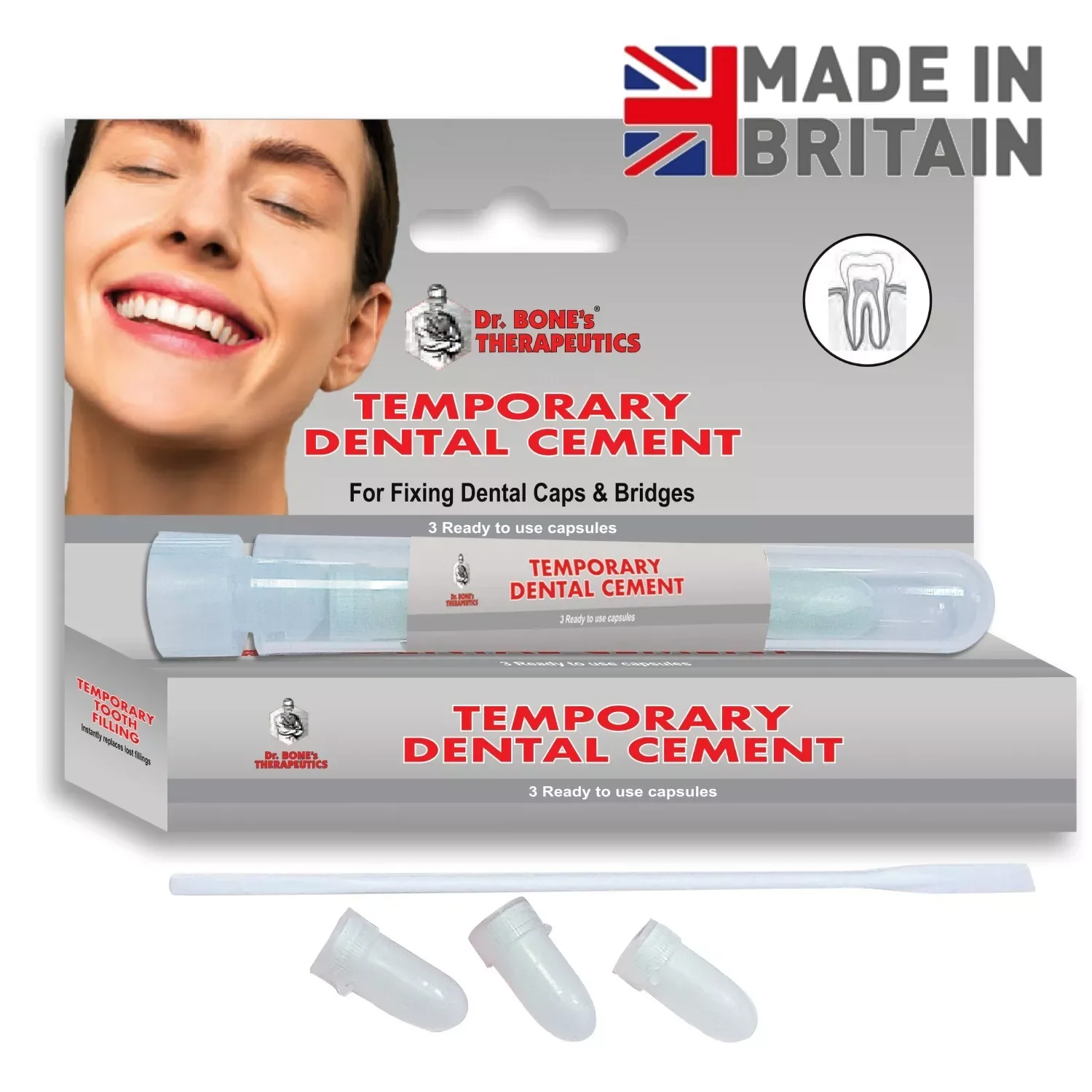
The method is simple: clean and dry the crown and the tooth, apply a small amount of cement, seat the crown gently, bite down to settle it and wipe away any excess. Our temporary dental cement capsules (3-pack) are UK-made and come ready to use, so you're not measuring or mixing in a stressful moment.
Temporary tooth-filling kits for a lost filling
If a filling has fallen out and left a hole or cavity, a temporary filling material fills the gap, keeps food and air out, and eases the sensitivity until a dentist can put in a permanent filling.
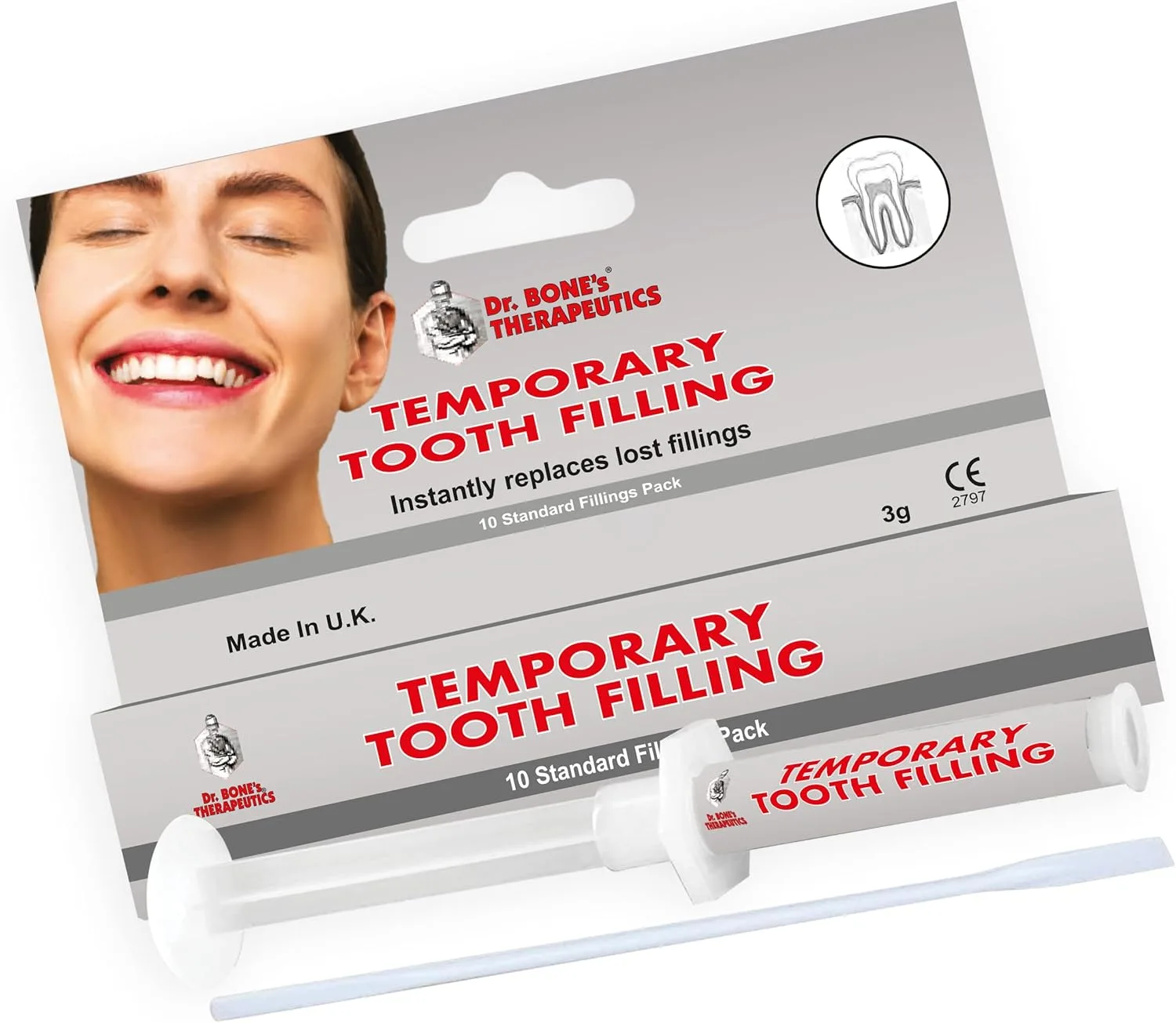
A ready-mixed kit like our temporary tooth filling kit with syringe applicator lets you place the material precisely and smooth it off, so there's no fiddly mixing. Keeping one in your medicine cabinet — or your home first aid kit — means you're ready if it ever happens.
How to apply a temporary filling, step by step
Always follow the instructions that come with your kit, but the general steps are:
- Rinse your mouth with warm water and gently clean the cavity or crown.
- Dry the area as much as you can — the material bonds better to a dry surface.
- Apply a small amount of temporary filling or cement; less is usually more.
- For a crown, seat it and bite down gently; for a cavity, press the material in and smooth the top.
- Wipe away any excess and avoid eating for the time stated on the pack.
What to avoid while you wait
Steer clear of very hard, sticky or chewy foods, chew on the other side of your mouth, and don't poke at the area with your tongue or a toothpick. Temporary repairs are exactly that — temporary. They're designed to hold for a short time, not to replace a dentist's work.
When to see a dentist urgently
A temporary fix buys you time, but book a dental appointment as soon as you can. Seek urgent or emergency dental care if you have severe or spreading pain, facial swelling, bleeding that won't stop, a fever, or a broken tooth with a sharp edge cutting your mouth. If in doubt, call your dentist or NHS 111 for advice.
Be ready before it happens
The people who cope best with a lost filling or crown are the ones who already had a repair kit at home. It's an inexpensive thing to keep in the cupboard, and it turns a stressful emergency into a manageable one. Browse our UK-made dental cement and temporary filling kits, and if you'd like help choosing, get in touch.