
"Gel heel" products all look much the same online, but they do very different jobs. A sleeve wraps around the heel, a cup sits inside the shoe under the heel, and a grip sticks to the back of a shoe that is too loose. Buy the wrong one and it simply won't help.
This UK guide explains which type suits which problem, how to get the size right, and when heel pain needs a professional rather than a product. It's general information, not medical advice.
The quick answer: sleeve, cup or grip?
- Dry, rough or rubbed skin around the heel: a gel heel sleeve.
- Pain under the heel when you stand or walk: a gel heel cup.
- Shoes that slip off or rub at the back: a sticky heel grip.
Gel heel sleeves
A heel sleeve is a stretchy fabric sock with an open toe and ankle and a soft silicone gel lining around the heel. You wear it directly on the skin, on its own at home or under a normal sock. The gel adds a soft layer of padding around the heel and reduces rubbing, and many people wear sleeves to help keep moisture in dry, hard or cracked skin.

Our silicone gel heel sleeves come as two pairs, so you can wash one and wear the other. The gel heel protector sleeves are sold as a two-piece set, a simple way to try them.
Gel heel cups and pads
A heel cup is a shaped silicone pad that sits inside your shoe, under the heel. It adds cushioning each time your heel meets the ground, which is why it's the type to look at for pain underneath the heel. The NHS lists soft insoles or heel pads in your shoes among the things you can try at home for heel pain.

Heel cups come in shoe-size ranges, so check yours before you buy:
- Dr. Bone's gel heel cups, UK 3 to 6.5 (red, 2 count)
- Dr. Bone's gel heel cups, UK 7 to 11 (blue, 2 count)
- Gel heel cushion pads, UK 7 to 12 (4 pieces, useful for more than one pair of shoes)
A cup needs room, so it works best in shoes with some depth, such as trainers, boots and sturdy everyday shoes. If your heel starts to lift out of the shoe, try a pair with more space.
Sticky heel grips for loose shoes
Heel grips solve a different problem: a shoe that's slightly too big, or one that rubs at the back. A grip sticks inside the back of the shoe, fills a little of the extra space and holds your heel in place. Our invisible gel heel grips are self-adhesive and take up roughly half a shoe size.
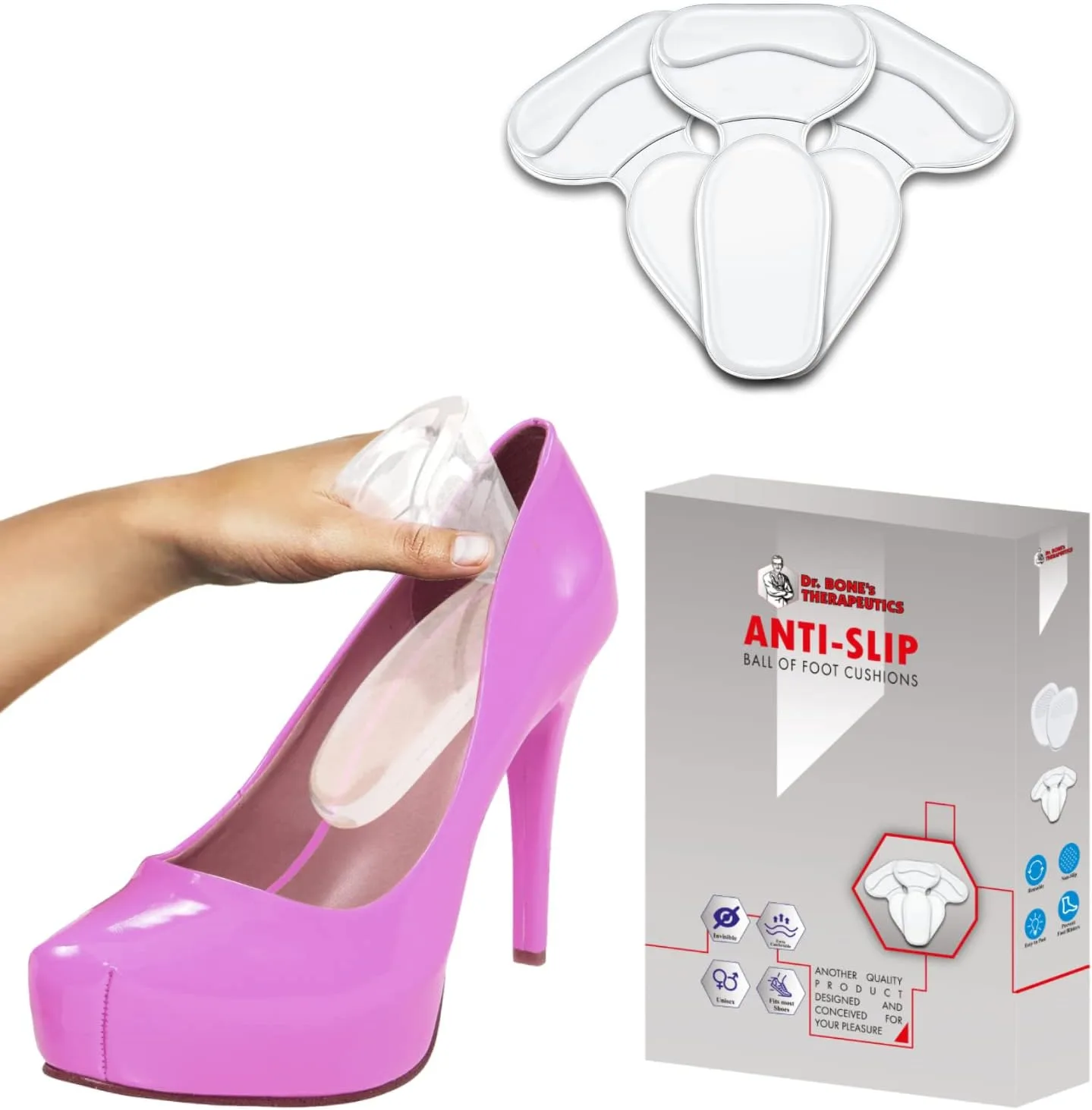
Grips are for fit and rubbing, not for heel pain. To fit one, clean and dry the inside of the shoe first, then try the shoe on with the grip held in place to find the right position before you press it down.
Sleeve, cup or grip compared
- Gel heel sleeve: worn on the foot against the skin, for dry or rubbed skin and padding around the heel. Often uni-size, so check the listing.
- Gel heel cup or pad: sits inside the shoe under the heel, for cushioning when the underside of the heel hurts. Sold by shoe-size range.
- Heel grip: sticks inside the back of the shoe, for loose shoes, slipping and rubbing.
Getting more from gel heel products
- Start gradually. Wear them for a few hours at first and check your skin afterwards.
- Put them on clean, dry feet. Sleeves in particular work best against clean skin.
- Wash them regularly. Rinse in warm, soapy water and let them air dry.
- Check the shoes as well. The NHS suggests wide, comfortable shoes with a low heel and a soft sole, and advises against high heels and tight, pointy shoes while you have heel pain.
- Don't use them on broken skin. Take them off if you notice soreness, numbness or a rash.
When to see a GP or call 111
Gel products can make everyday walking more comfortable, but they don't treat the cause of heel pain, and the NHS advises against trying to diagnose it yourself. Based on the NHS heel pain guidance, see a GP if:
- the pain is severe or stops you doing normal activities
- it's getting worse or keeps coming back
- it hasn't improved after 2 weeks of treating it at home
- you have tingling or loss of feeling in your foot
- you have diabetes and heel or foot pain
Contact NHS 111 for severe heel pain after an injury, particularly if you heard a snap or pop, your foot or ankle has changed shape, or you can't walk on it. A pharmacist can also advise on painkillers and on insoles and pads for your shoes.
Shop heel sleeves, cups and grips
See the full range on our gel heel sleeves and foot protectors page, with free UK delivery over £50. For other everyday supports, read our guide to knee supports or our overview of everyday aids that help elderly parents stay independent.